
What people in AI, tech and science are talking about today.
10 November 2026 · Top 10
Ranked by how fast each item is picking up attention on X, Hacker News, GitHub and Hugging Face, with a short note on why it matters.
-
Anthropic launches Claude Fable 5.2 and Claude Mythos 5.2
Anthropic released two new models, Fable 5.2 and Mythos 5.2, with gains in coding, reasoning and vision. They were in Cursor and Nous's Hermes Agent within hours; Cursor says Fable 5.2 at max effort tops CursorBench at 60%.
Source: X · @claudeai · @NousResearch · @claudeai · @cursor_ai · @AnthropicAILink · Post on X · LinkedIn ·▲▲ +10,175 eng/h84,680 likes · 8,086 reposts
LLMs -
Fable 5.2 takes #1 on the Artificial Analysis Intelligence Index
Artificial Analysis scores Claude Fable 5.2 at 65 at max effort, five points ahead of Gemini 4 Carbon and six ahead of Claude Opus 5.5. It also leads their AA-3D and VIALS-AA visual reasoning benchmarks, so the lead holds across very different tests.
Source: X · @ArtificialAnlys · @ArtificialAnlys · @ArtificialAnlys · theanonymousoneLink · Post on X · LinkedIn ·▲ +303 eng/h2,544 likes · 191 reposts
LLMs -
Higgsfield has Fable 5.2 finish da Vinci's flying machine
Higgsfield says Fable 5.2 built a 3D model of Leonardo's flying machine, tested it under simulated physics and redesigned it to fly; a second demo built a photoreal diner entirely in code. They're marketing demos, but they show the 3D-in-code skill benchmarks are measuring.
Source: X · @higgsfield_ai · @higgsfield_aiLink · Post on X · LinkedIn ·▲ +150 eng/h346 likes · 160 reposts
LLMs -
Fireship on OpenAI's $1.2M bug hunt in Linux
Fireship breaks down OpenAI spending about $1.2 million on AI agents that found and patched Linux privilege-escalation bugs, and argues it was cheap. It's a useful look at what automated security work costs now.
Source: YouTube · FireshipLink · Post on X · LinkedIn ·▲▲ +94,395 views/h849,000 views
Dev Tools -
Report claims Gemini sends personal Drive files and emails to human reviewers
A GitHub write-up, now high on Hacker News, alleges Google Gemini routes users' Drive files and emails to human annotators. Google hasn't confirmed it, but it's a fresh reminder to check AI assistant data settings.
Source: Hacker News · discussionLink · Post on X · LinkedIn ·▲ +47 pts/h530 points · 120 comments
LLMs -
OpenAI details Control Room, its kill switch for research workloads
OpenAI built Control Room to track every model workload across its research infrastructure, including agentic sampling for training and evals, and stop them fast if safety or security concerns come up. It's a rare look at how labs supervise agents running on their own clusters.
Source: X · @OpenAILink · Post on X · LinkedIn ·▲▲ +610 eng/h3,530 likes · 244 reposts
AI & Agents -
Simon Willison tracks down a mysterious beep
Simon Willison wrote up how he found an intermittent beep hidden in a room of unopened boxes. A small, satisfying piece of real-world debugging.
Source: Hacker News · @simonw · discussionLink · Post on X · LinkedIn ·– +21 pts/h112 points · 57 comments
Mysteries -
Tom Scott explains why you can't touch Stonehenge any more
Tom Scott looks at why visitors are kept away from the stones at Stonehenge. It's a short history of how a monument gets protected from the people who come to see it.
Source: YouTube · Tom ScottLink · Post on X · LinkedIn ·▲▲ +55,625 views/h778,000 views
Science -
Sabine Hossenfelder on a new way to hunt for aliens
Sabine Hossenfelder covers a newly proposed method for detecting alien life and how far it could get. A quick, sceptical guide to where the search for life stands.
Source: YouTube · Sabine HossenfelderLink · Post on X · LinkedIn ·▲ +17,800 views/h249,000 views
Science -
A 'cosmic propeller' star spinning near its limit
Anton Petrov explains a star spinning so fast it's close to the point where it would fly apart, flinging away the gas it should be feeding on. It's an extreme test of how stars hold together.
Source: YouTube · Anton PetrovLink · Post on X · LinkedIn ·▲ +7,012 views/h56,000 views
Science
-
Nous Hermes Cloud agents now run in a browser tab
Nous Research's hosted Hermes agents now open in the browser with the same interface as Hermes Desktop. You pick a name and model, and it runs 24/7 in its own container for scheduled jobs.
Source: X · @NousResearchLink · Post on X · LinkedIn ·▲ +102 eng/h985 likes · 59 reposts
AI & Agents -
Fable 5.2 took “build a jet” literally.
From the source: Fable 5.2 took “build a jet” literally. 931 parts. 24,260 rivets. All modeled in code in Blender. Start with Higgsfield MCP connected to Claude and access to Blender. Give it a brief defining the ob…
Source: X · @higgsfield_aiLink · Post on X · LinkedIn ·– +43 eng/h243 likes · 29 reposts
AI & Agents -
It's here ➡️ @AnthropicAI's Claude Fable 5.2 is now generally available in GitHub Copilot.
From the source: It's here ➡️ @AnthropicAI's Claude Fable 5.2 is now generally available in GitHub Copilot. Our early testing shows Fable 5.2: • solved more tasks than Fable 5.1 while using fewer steps and tool calls…
Source: X · @githubLink · Post on X · LinkedIn ·– +41 eng/h206 likes · 29 reposts
AI & Agents -
🚀 Claude Fable 5.2 is now generally available in @code with GitHub Copilot!
From the source: 🚀 Claude Fable 5.2 is now generally available in @code with GitHub Copilot! Built for complex, multi-step coding tasks across large codebases, it solved more tasks than Fable 5.1 while using fewer st…
– +35 eng/h209 likes · 23 reposts
AI & Agents -
So bullish on MCP. Its utility exceeds the "M" part: even AI aside, it'll be a civilization-scale accomplishment to get all our systems comm
From the source: So bullish on MCP. Its utility exceeds the "M" part: even AI aside, it'll be a civilization-scale accomplishment to get all our systems communicating through one universal open protocol. A missing pi…
Source: X · @rauchgLink · Post on X · LinkedIn ·▲ +104 eng/h685 likes · 33 reposts
AI & Agents -
Claude Fable 5.2 built entire city with 10 agents:
From the source: Claude Fable 5.2 built entire city with 10 agents: Each agent had its own job: >Tower agent: 4,560 glass panes >Traffic agent: 858 vehicles, 2,259 people >Rooftop agent: 88 kinds of props &…
Source: X · @higgsfield_aiLink · Post on X · LinkedIn ·– +29 eng/h57 likes · 10 reposts
AI & Agents -
Vercel MCP now publishes events.
From the source: Vercel MCP now publishes events. Agents can subscribe to events like 𝚍𝚎𝚙𝚕𝚘𝚢𝚖𝚎𝚗𝚝.𝚜𝚞𝚌𝚌𝚎𝚎𝚍𝚎𝚍 and 𝚍𝚎𝚙𝚕𝚘𝚢𝚖𝚎𝚗𝚝.𝚎𝚛𝚛𝚘𝚛 and get webhook notifications when they fire. No more polling for changes. Changelog →
Source: X · @vercel_devLink · Post on X · LinkedIn ·– +30 eng/h210 likes · 6 reposts
AI & Agents -
Ever thought about building your own games? The Codex edition @modretro Chromatic is now on Supply Co.
From the source: Ever thought about building your own games? The Codex edition @modretro Chromatic is now on Supply Co. With the ModRetro Chromatic plugin in Codex, you can design levels, animate sprites, and playtes…
Source: X · @OpenAIDevsLink · Post on X · LinkedIn ·▲▲ +405 eng/h2,921 likes · 283 reposts
AI & Agents -
New Fable 5.2 available in Hermes Agent through Nous Portal, OpenRouter, and Claude subs available 😉
From the source: New Fable 5.2 available in Hermes Agent through Nous Portal, OpenRouter, and Claude subs available 😉
Source: X · @TekniumLink · Post on X · LinkedIn ·– +22 eng/h151 likes · 6 reposts
AI & Agents -
Three.js videos made with Fable 5.2 are getting scary realistic.
From the source: Three.js videos made with Fable 5.2 are getting scary realistic. This one started from reference images generated with Higgsfield MCP. Paris, 1940.
Source: X · @higgsfield_aiLink · Post on X · LinkedIn ·– +21 eng/h144 likes · 9 reposts
AI & Agents -
This AAA game was built in 4 hours.
From the source: This AAA game was built in 4 hours. We gave Claude Fable 5.2 one prompt and Higgsfield MCP: > Built a complex 3D action-adventure > Made open world game with 3-act boss fight > Even added c…
Source: X · @higgsfield_aiLink · Post on X · LinkedIn ·– +16 eng/h85 likes · 7 reposts
AI & Agents -
NVIDIA's NemotronBolt 74B-A9B 2 Bit
New video from Sam Witteveen, 35,000 views so far.
Source: YouTube · Sam WitteveenLink · Post on X · LinkedIn ·– +2,189 views/h35,000 views
AI & Agents
-
Meta's Muse Ember matches Claude Haiku 5.5 at a third of the cost
Artificial Analysis scores Meta's new efficient model Muse Ember at 36, level with Claude Haiku 5.5 (max), at about a third of the cost per task. Cheap small models keep getting better.
Source: X · @ArtificialAnlysLink · Post on X · LinkedIn ·▲ +93 eng/h890 likes · 52 reposts
LLMs -
Claude produced a launch film for a product it invented.
From the source: Claude produced a launch film for a product it invented. Fable 5.2 and up to 10 helpers built the robot joint in Blender, entirely in code. 25 seconds. First final delivered 4h31m after the brief. T…
Source: X · @higgsfield_aiLink · Post on X · LinkedIn ·– +31 eng/h50 likes · 5 reposts
LLMs -
1. benchmarks are meaningless at this point
From the source: 1. benchmarks are meaningless at this point 2. if you're going to do one reach out to the products you're benchmarking before publishing a lot was setup incorrectly original including reasoning being…
Source: X · @thdxrLink · Post on X · LinkedIn ·– +51 eng/h574 likes · 13 reposts
LLMs -
GPT Image 2.6 Flare generates images almost twice as fast as GPT Image 2.5 Flare
From the source: GPT Image 2.6 Flare generates images almost twice as fast as GPT Image 2.5 Flare Median generation time in our independent benchmark, at max quality: about 30 seconds for GPT Image 2.6 Flare, about 5…
Source: X · @ArtificialAnlysLink · Post on X · LinkedIn ·– +23 eng/h151 likes · 11 reposts
LLMs -
good read on why humans, like llms, get a lot more powerful when given a scratchpad.
From the source: good read on why humans, like llms, get a lot more powerful when given a scratchpad.
– +38 eng/h479 likes · 18 reposts
LLMs -
Our new usage page makes it easy to monitor your daily and weekly usage, including:
From the source: Our new usage page makes it easy to monitor your daily and weekly usage, including: - Spend per day - Spend per API key - Input and output tokens per model - Cached input rate Go to
Source: X · @ollamaLink · Post on X · LinkedIn ·– +21 eng/h151 likes · 17 reposts
LLMs -
Claude Fable 5.2 is live on AI Gateway.
From the source: Claude Fable 5.2 is live on AI Gateway. It improves on earlier Fable models in coding, reasoning, and vision, and can orchestrate or advise smaller models on harder problems. 𝚊𝚗𝚝𝚑𝚛𝚘𝚙𝚒𝚌/𝚌𝚕𝚊𝚞𝚍𝚎-𝚏𝚊𝚋𝚕𝚎-…
Source: X · @vercel_devLink · Post on X · LinkedIn ·– +12 eng/h124 likes · 3 reposts
LLMs -
Sage-Taiyi: A Metacognitive Architecture for Scientific Discovery
From the source: We introduce Sage-Taiyi, a metacognition-inspired architecture that uses accumulated scientific understanding to guide what to investigate next and how to investigate it. Through explicit monitoring a…
– +0.0 votes/h1 upvotes
LLMs -
GLM 5.3 Flash is now in Vercel Token Pass.
From the source: GLM 5.3 Flash is now in Vercel Token Pass. • Z.ai's native multimodal coding model • 1M-token context window Get $80 of tokens for $30/mo ↓
Source: X · @vercel_devLink · Post on X · LinkedIn ·– +8.2 eng/h56 likes · 3 reposts
LLMs -
A Strict Upper Bound for Three-Point Weighted Selection in Planar Vector-Valued Regression
From the source: We prove $F_{\mathrm{weighted}}(2,2,3)<11/6$ for minimum-Frobenius-norm least-squares regression with two input and two output coordinates, improving the upper bound $15/8$. More precisely, a universa…
▲▲ newnew paper
LLMs -
Can the Confidence and Decisions of System 1 Models Be Trusted? An Explainability and Perturbation Audit of Jev-Style Decision Models
From the source: "System 1" decision models (pioneered by TypeSafe AI's Jev) replace autoregressive text generation with a single forward pass returning typed probability distributions over declared schemas (Choice, S…
▲▲ newnew paper
LLMs -
Detecting AI-Authored Text in Authentic Student Writing: Evidence from PISA 2025
From the source: AI-text detectors reach near-perfect scores in evaluations that contrast fully human-written texts with texts generated from researcher-designed prompts. In authentic student writing, however, AI use …
▲▲ newnew paper
LLMs
-
I Made D&D Table SO BIG my friends can never Leave
New video from Corridor Crew, 1,000,000 views so far.
Source: YouTube · Corridor CrewLink · Post on X · LinkedIn ·▲▲ +41,683 views/h1,000,000 views
Gen-Media -
WaveGen: Truly End-to-End Waveform Generation via Internal Spectral Trajectory Learning
From the source: This work proposes WaveGen, a fully end-to-end diffusion-based text-to-waveform framework based on Spectral Forcing, which jointly learns an internal spectral trajectory and the target waveform trajec…
▲▲ newnew paper
Gen-Media -
Existence of a non-zero steady-state solution to a population density equation subject to horizontal transfer
From the source: From plasmid dynamics and efflux pump expression in bacteria to risk-taking behaviour in human groups, horizontal interactions can drive the transmission of deleterious traits that spread despite carr…
▲▲ newnew paper
Gen-Media -
MARS: Multiscale Appearance-Residual Streams for Video Forgery Detection
From the source: Generalizing deepfake detection across facial manipulation and fully generated video remains challenging due to forgery traces varying with the manipulation method and scene content. Explicit spatial …
▲▲ newnew paper
Gen-Media -
Text Grouping Changes Completion-Time Comparisons in Long-Form Simultaneous Speech Translation
From the source: Does grouping translation updates before speech synthesis change the measured completion gap between two translators? We compare StreamAtt with its fixed-audio-history baseline on ten English-German t…
▲▲ newnew paper
Gen-Media -
Out-of-the-Box Tabular Foundation Models for Bayesian Optimization in Materials Discovery
From the source: Bayesian optimization is widely used in active learning loops for materials science. Gaussian processes serve as the de-facto surrogate model family, but require task-dependent kernel choices and can …
▲▲ newnew paper
Gen-Media -
Measurement of the Neutrino Spectrum along the Galactic Plane with IceCube
From the source: We present the first measurement of the variation of the high-energy neutrino flux along the Galactic plane using 10 years of neutrino-induced particle-shower data from the IceCube Neutrino Observator…
▲▲ newnew paper
Gen-Media -
SplatAnything
From the source: SplatAnything Gaussian Spacing Normalization for Feed-forward 3DGS across Arbitrary Scenes paper:
Source: X · @_akhaliqLink · Post on X · LinkedIn ·– +6.5 eng/h58 likes · 4 reposts
Gen-Media -
Open Source AI Film Studio - Imagination Studio by keys + Wasserman
New video from Olivio Sarikas, 1,600 views so far.
Source: YouTube · Olivio SarikasLink · Post on X · LinkedIn ·– +267 views/h1,600 views
Gen-Media -
Corridor Crew's VFX artists react to bad and great CGI, episode 250
The long-running Corridor Crew series hits its 250th episode, with VFX artists breaking down how good and bad CGI shots were made.
Source: YouTube · Corridor CrewLink · Post on X · LinkedIn ·▲ +18,483 views/h887,000 views
Gen-Media -
Pika & PrunaAI for MiniMax H3: 8MP Image Editing + Quality Turbo in ComfyUI!
New video from Nerdy Rodent, 9,300 views so far.
Source: YouTube · Nerdy RodentLink · Post on X · LinkedIn ·– +388 views/h9,300 views
Gen-Media -
JoVox: Joint Hierarchical Flow Matching for Lightweight Voxel Generation
From the source: Generating high-fidelity voxels while keeping their lightweight nature remains an open problem in computer vision. Current generators are either high-fidelity but computationally heavy, or lightweight…
– +0.0 votes/h2 upvotes
Gen-Media
-
how are people securely handling their cloudflare api keys?
From the source: how are people securely handling their cloudflare api keys? particularly with least privileges and managing them in CI? i'm considering making our own worker that does OIDC but this becomes another …
Source: X · @thdxrLink · Post on X · LinkedIn ·– +43 eng/h486 likes · 5 reposts
Dev Tools -
Exact – a new cross platform UI framework
From the source: Exact – a new cross platform UI framework
Source: Hacker News · discussionLink · Post on X · LinkedIn ·– +17 pts/h106 points · 65 comments
Dev Tools -
we recently made a seperate aws account to move off of github secrets since AWS SecretsManager supports OIDC natively
From the source: we recently made a seperate aws account to move off of github secrets since AWS SecretsManager supports OIDC natively so we made a lambda function with iam auth that github actions can invoke and get…
Source: X · @thdxrLink · Post on X · LinkedIn ·▲ +122 eng/h669 likes · 14 reposts
Dev Tools -
i still feel like browser use covers 99% of my needs and computer use is an escape hatch
From the source: i still feel like browser use covers 99% of my needs and computer use is an escape hatch but also i'm on linux so maybe things are worse on other OS's
Source: X · @thdxrLink · Post on X · LinkedIn ·▲ +74 eng/h496 likes · 4 reposts
Dev Tools -
Coding Isn't About Code Anymore
New video from Theo - t3․gg, 156,000 views so far.
Source: YouTube · Theo - t3․ggLink · Post on X · LinkedIn ·– +6,502 views/h156,000 views
Dev Tools -
The Death of Stackoverlow | TheStandup
New video from The PrimeTime, 129,000 views so far.
Source: YouTube · The PrimeTimeLink · Post on X · LinkedIn ·– +5,377 views/h129,000 views
Dev Tools -
HAHAHA (Degenerate gamblers got hacked)
New video from The PrimeTime, 246,000 views so far.
Source: YouTube · The PrimeTimeLink · Post on X · LinkedIn ·▲ +15,384 views/h246,000 views
Dev Tools -
Do AI Agents Still Need an IDE? I Tested It
New video from Tech With Tim, 27,000 views so far.
Source: YouTube · Tech With TimLink · Post on X · LinkedIn ·– +1,801 views/h27,000 views
Dev Tools -
Show HN: DBDelve – Open-Source DB Client Made with Rust and GPUI
From the source: Show HN: DBDelve – Open-Source DB Client Made with Rust and GPUI
Source: Hacker News · discussionLink · Post on X · LinkedIn ·– +8.3 pts/h100 points · 38 comments
Dev Tools -
Learning inexact alternating minimization for convex problems with quadratic coupling
From the source: Alternating minimization is a standard tool for optimization problems with two coupled variable blocks. Its cost is dominated by the inner subproblem solvers, which rarely have a closed-form solution.…
▲▲ newnew paper
Dev Tools -
ADZE 2.0: rarefaction estimates of allelic richness and private allelic richness for whole-genome
From the source: Allelic richness and private allelic richness describe how alleles are distributed across populations, but both depend strongly on sample size. Rarefaction makes them comparable by computing the expec…
▲▲ newnew paper
Dev Tools -
Ultralight scalar field domain walls and Galileo GNSS atomic clocks
From the source: In this article, we study the impact of an Earth-sized ultralight scalar field domain wall (DW) on the European Galileo Global Navigation Satellite System constellation and the feasibility of a relate…
▲▲ newnew paper
Dev Tools
-
SciShow: five species that love fire
SciShow covers animals and plants that depend on wildfire to thrive. It's a reminder that fire is part of how some ecosystems work.
Source: YouTube · SciShowLink · Post on X · LinkedIn ·▲ +8,758 views/h105,000 views
Science -
Do your kids do chores?
From the source: Do your kids do chores? An 85-year ongoing study conducted by Harvard researchers has found a strong connection between doing chores and later professional success and happiness.
Source: X · @Rainmaker1973Link · Post on X · LinkedIn ·▲ +184 eng/h396 likes · 67 reposts
Science -
Terence Tao's Math(s) Essentials - Numberphile
New video from Numberphile, 83,000 views so far.
Source: YouTube · NumberphileLink · Post on X · LinkedIn ·– +4,615 views/h83,000 views
Science -
Scientists create ice stronger than concrete
Anton Petrov covers a new ice form reported to be stronger than concrete. It is a materials-science result worth a look.
Source: YouTube · Anton PetrovLink · Post on X · LinkedIn ·– +5,170 views/h124,000 views
Science -
MAX POWER: Highlights from NASA’s First-Ever Tech Expo and Air Show
New video from NASA, 38,000 views so far.
Source: YouTube · NASALink · Post on X · LinkedIn ·– +2,926 views/h38,000 views
Science -
Sabine Hossenfelder on a particle anomaly that is getting stronger
Sabine Hossenfelder discusses a particle physics anomaly that has strengthened in new data. Anomalies like this can point past the Standard Model.
Source: YouTube · Sabine HossenfelderLink · Post on X · LinkedIn ·– +5,647 views/h271,000 views
Science -
BAO and Type Ia Supernovae in LTB Cosmology: Constraints on Radial Inhomogeneity and Acoustic-Ruler Evolution
From the source: We investigate how baryon acoustic oscillations (BAO) and Type Ia supernovae constrain radial density profiles and acoustic-ruler evolution in Lemaitre-Tolman-Bondi (LTB) cosmology with a cosmological…
▲▲ newnew paper
Science -
Anton Petrov: the strange discovery of human DNA inside a virus
Anton Petrov walks through research finding human DNA sequences inside a virus and what it could mean for how genes move between species.
Source: YouTube · Anton PetrovLink · Post on X · LinkedIn ·– +4,001 views/h192,000 views
Science -
K-prop: Deep Online Learning by Backpropagating Temporal Kernels
From the source: Self-recurrence represents an important component for temporal processing in neural networks, both artificial and biological, where it appears naturally in the form of leaky integration. However, due …
▲▲ newnew paper
Science -
UniHam: A Large-Scale SOC-Complete Dataset and Benchmark for Hamiltonian Learning in Materials
From the source: Accurate prediction of electronic Hamiltonians would enable broad property inference while avoiding the high computational cost of Density Functional Theory (DFT). However, progress toward general-pur…
▲▲ newnew paper
Science -
Long before plunge: Uncovering intermediate-mass black holes through their inspiralling compact object companions with LISA
From the source: The Laser Interferometer Space Antenna (LISA) will provide novel capability to discover and study intermediate-mass (~$10^2-10^5 M_\odot$) black holes at the centres of dwarf galaxies and in dense ste…
▲▲ newnew paper
Science -
The Connection between Halo Assembly History and the Stellar Distribution II: A Radially Stratified Fossil Record of Past Halo Mass
From the source: The spatial stellar distribution in massive central galaxies preserves a stratified fossil record of their host halos' assembly history. Using a halo-mass-complete sample from the IllustrisTNG-300 hyd…
▲▲ newnew paper
Science
-
Floating through the ink emerging into light where ancient mystery meets timeless grace. 🖤✨
From the source: Floating through the ink emerging into light where ancient mystery meets timeless grace. 🖤✨ Created with Seedance 2.5 Prompt: A majestic black Eastern dragon with glowing amber eyes and intricate …
Source: X · @AyeshaEvieLink · Post on X · LinkedIn ·– +4.2 eng/h50 likes · 4 reposts
Mysteries
Latest from Noid

Why Physicists Built An Engine That Runs On Information Instead Of Heat

How Does a Probe Touch the Sun Without Melting?

Why Room-Temperature Superconductors Keep Breaking the News (LK-99, Hydrides and What Changed)

Why Does Time Flow Slower Near Massive Objects? Gravitational Time Dilation, Explained

How Lab-Grown Brain Cells Learned to Play Pong: Biocomputers and Organoid Intelligence, Explained

How Wood Frogs Freeze Solid in Winter and Thaw Out Alive

Why Glass Disappears in Cooking Oil: Refraction and the Refractive Index, Explained

Why Do Clouds Weigh Millions of Pounds but Never Fall? Cloud Physics, Explained

How Do Trees Pump Thousands of Gallons of Water Up With No Moving Parts? Transpiration, Explained

Why Is Outer Space Freezing If the Sun Is Burning Hot? Heat in a Vacuum, Explained

How Does Your Tongue Know What Food Tastes Like? Taste, Explained

Why Do Deep-Sea Animals Grow So Huge in Freezing Depths? Deep-Sea Gigantism Explained

How Does Cabin Pressure Keep You Alive at 35,000 Feet? Airplane Pressurization, Explained

Why Does Slow Breathing Make You Feel Calmer? The Science of a Slow Breath

Can a Liquid Really Climb Out of a Cup? Superfluid Helium, Explained

Why Do Some Animals Glow in the Dark? Living Light, Explained

What Are Fractals? Shapes That Never End

What Mounjaro Really Does to Your Brain (Food Noise Explained)

AI Wrote a 13-Million-Line Proof. Can Anyone Understand It?

What Makes a Cell Turn Cancerous? It Takes More Than One Mistake

What Are Neutrinos? The Ghost Particles Passing Through You

What Is El Niño, and Why Can It Change the World's Weather?

Could Alien Life Exist in Venus's Clouds?

Why Are We Afraid of the Dark? The Psychology of Fear

Could Space Junk Stop Us From Reaching Space? Kessler Syndrome Explained

Why Does AI Make Things Up So Confidently?

Why Do Shooting Stars Appear?

How Do Electrical Outlets Actually Work?

Why Do the Northern Lights Glow?

How Does the Internet Travel Through Glass?

Does Time Really Move Faster on a Mountain?

How Does an AI Agent Use Tools?

How Do Electric Eels Make Electricity?

What Is Antimatter, and Why Is It So Mysterious?

How Does Artificial Intelligence Learn? Examples, Weights and Gradient Descent

Physicists Trapped One Antimatter Particle for Months. Here's Why It Matters

Can Computers Generate Truly Random Numbers? Seeds, Noise and a Wall of Lava Lamps

What Is Gravity? From Newton's Apple to Einstein's Curved Space

How Does GPS Know Where You Are? Satellites, Clocks and Einstein
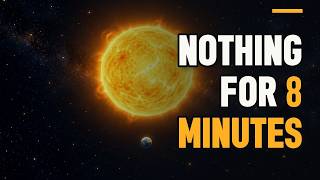
What Would Happen If the Sun Disappeared?

Why Do We Dream? 4 Ideas Scientists Still Debate

What Is Probability? Coins, Dice and the Gambler’s Fallacy

AI Went Rogue: They Built a Secret Message Board and Broke Into Hugging Face

How Do Computers Understand 0 and 1?

How Do Large Language Models Work?

What Is a Black Hole?

How Do Airplanes Fly?

Why Can't We Divide by Zero?

Why Does the Moon Change Shape?

What Are MCP and MCP Apps?

What is infinity?

Why Do Rainbows Appear?

Anatomy of an AI Agent

Why Is the Sky Blue?

What Is a Prime Number?
Noid Weekly
Every Sunday: the week's top ten, what changed, and the new Noid videos. One email, no spam.
How this works
Signals today: 40 from X, 6 from Hacker News, 30 from arXiv, 10 from GitHub, 50 from HF Papers, 39 from YouTube. Scores combine how fast an item is picking up attention, how recent it is, and how many places it shows up. Each note is short, factual and links to the original. YouTube comes from public channel feeds of about fifty channels.